
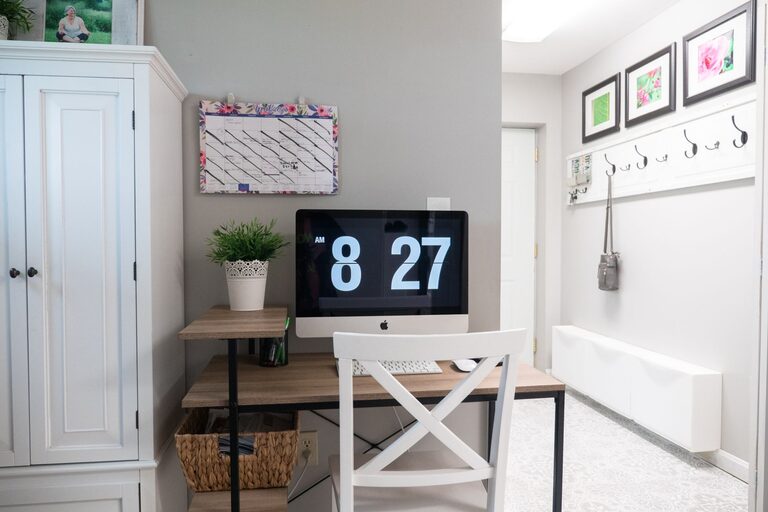
A family command center is a central place for managing the information and items your household uses every day. It can help everyone keep track of schedules, appointments, chores, school papers, keys, and other essentials.
The best command center is not necessarily large or expensive. It should be easy to use, simple to maintain, and suited to your family’s routines. With a few thoughtful choices, you can create an organized space that keeps important details visible and reduces daily confusion.
What Is a Family Command Center?
A family command center is a designated area where household information and frequently used items are organized. It may be located in a kitchen, entryway, mudroom, home office, or another convenient spot.
A command center might include:
– A family calendar
– A place for incoming mail
– A weekly meal plan
– A chore chart
– Hooks for keys and bags
– A shopping list
– A school paper organizer
– A small whiteboard or bulletin board
– Storage for pens, labels, and other supplies
You do not need to include every feature. Start with the items that solve your family’s biggest organizational challenges.
Choose the Right Location
The location is one of the most important decisions. Choose a spot that family members pass by often and can easily reach.
Good locations include:
– Near the main entrance
– Beside the kitchen
– In a mudroom
– Near the garage door
– Outside a home office
– Along a frequently used hallway
Avoid placing the command center in an area that is hidden, crowded, or difficult to access. If family members have to walk across the house to check the calendar or drop off papers, they may stop using it.
Before installing anything, observe your household for a day or two. Notice where backpacks, mail, shoes, and keys naturally collect. Your command center may work best in or near that existing drop zone.
Decide What Your Family Needs
Every household has different routines. Take a few minutes to list the information and items that often get misplaced or forgotten.
Ask questions such as:
– Where do we usually put keys?
– How do we remember school activities?
– Do papers build up on the kitchen counter?
– Are chores clear to everyone?
– Do we need a weekly meal plan?
– Where should outgoing mail go?
– Do children need a place for permission slips?
– Which items should be visible, and which should be stored?
Use your answers to create a short list of essential features. A smaller system that everyone uses is better than a complicated setup that becomes cluttered.
Add the Essential Components
A Family Calendar
A calendar gives everyone a shared view of upcoming events. Choose a format that fits your household, such as a large wall calendar, dry-erase calendar, or printed monthly planner.
Use a different color for each family member if that makes the schedule easier to read. You can also reserve one color for shared events, such as holidays, appointments, or family activities.
Keep the calendar focused on important events. Too many details can make it difficult to scan quickly. More specific information can be stored in a digital calendar or individual planner.
A Mail and Paper Station
Create a clear process for handling incoming papers. Use labeled folders, trays, or wall pockets for categories such as:
– To review
– To sign
– To file
– School papers
– Outgoing items
Limit the number of categories so the system remains easy to understand. Set a regular time to sort papers and recycle anything that is no longer needed.
A small shredder or recycling bin nearby can make this task faster, but avoid storing large amounts of paper in the command center. The goal is to keep the area useful, not turn it into a permanent holding space.
Hooks and Small Item Storage
Hooks are helpful for keys, lunch bags, backpacks, coats, and reusable shopping bags. Assigning each family member a hook or small section can make cleanup easier.
For small items, consider using:
– Wall-mounted baskets
– Small bins
– A key rail
– Drawer organizers
– Labeled containers
Place frequently used items within easy reach. Store less commonly used supplies higher up or in a nearby cabinet.
A Meal Planning Area
A meal planning space can help reduce last-minute decisions and make grocery shopping easier. Add a weekly menu board or a simple printed meal plan.
Place a shopping list nearby. Family members can add items as they notice they are running low. For a digital option, use a shared note or app, but keep the process consistent so everyone knows where to add items.
The meal plan does not need to be strict. Leave room for leftovers, takeout, or schedule changes.
A Chore or Task List
A visible chore list helps clarify household responsibilities. Keep it simple and age appropriate. You might list daily tasks, weekly tasks, or rotating responsibilities.
A chore system can include:
– Each person’s assigned tasks
– A checklist for the week
– A rotating schedule
– A space to mark completed jobs
– A list of occasional household tasks
Avoid making the board so detailed that it becomes difficult to update. Review it regularly and adjust responsibilities as routines change.
Keep the Design Simple
A command center should support your home, not add another source of work. Use a consistent design with a limited number of colors and labels. This makes the area easier to understand and maintain.
Choose storage that fits the available space. For a small area, combine functions with a wall organizer that includes a calendar, mail slots, and hooks. In a larger space, separate each function into its own section.
Leave some open space so the area does not feel crowded. Clear surfaces also make it easier to notice new papers, notes, or tasks.
Make It Easy for Everyone to Use
The system will only work if all household members understand it. Explain what each section is for and where items belong.
For children, use clear labels, pictures, or color coding. Place their hooks, folders, and supplies at a comfortable height. Encourage them to take part in choosing colors or labels so the system feels familiar and personal.
For adults, agree on simple rules, such as:
– Check the calendar each morning
– Put keys in the same place
– Add appointments as soon as they are scheduled
– Empty the mail tray once a week
– Update the meal plan on a set day
The goal is to create habits that are quick and natural.
Establish a Weekly Reset
Even a well-designed command center will become cluttered without regular maintenance. Set aside 10 to 15 minutes once a week to reset the area.
During the reset:
- Remove expired notices and old papers.
- Update the family calendar.
- Review upcoming appointments and activities.
- Empty or sort the mail station.
- Check the shopping list and meal plan.
- Return misplaced items to their assigned locations.
- Replace missing supplies, such as pens or paper.
Choose a day that fits your schedule. Many families prefer the weekend, while others find it helpful to reset before the start of a new school or work week.
Start Small and Adjust
You do not need to build the perfect command center on the first attempt. Begin with the features your family needs most, then observe what works.
If papers continue to pile up, add better file categories. If the calendar is ignored, move it to a more visible location. If hooks become overcrowded, assign specific hooks or add a basket for shared items.
Review the setup after a few weeks. Remove anything that is not being used and simplify sections that feel confusing. A command center should change as your household’s routines, schedules, and storage needs change.
With a convenient location, clear labels, and a short weekly reset, a family command center can make everyday organization easier. The most successful setup is one that fits naturally into your home and helps everyone know what to do next.